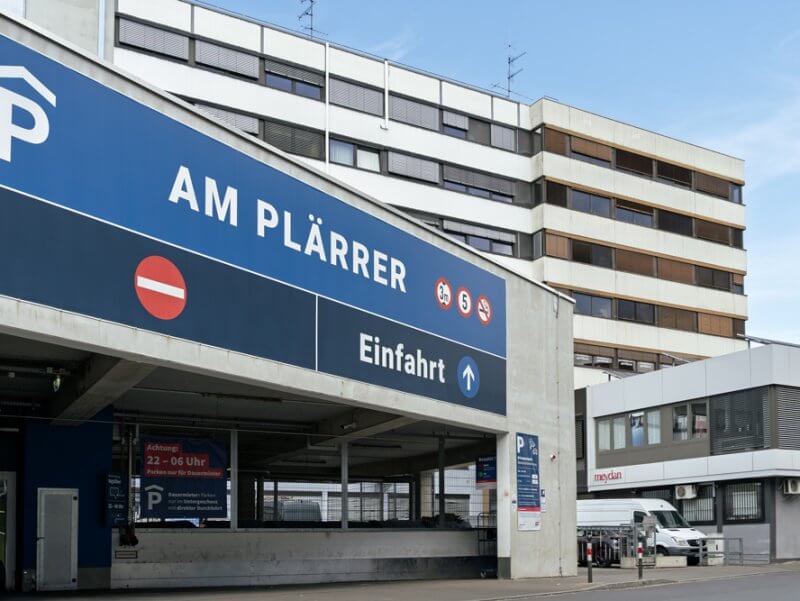
Digital parking guidance systems for greater convenience and efficiency
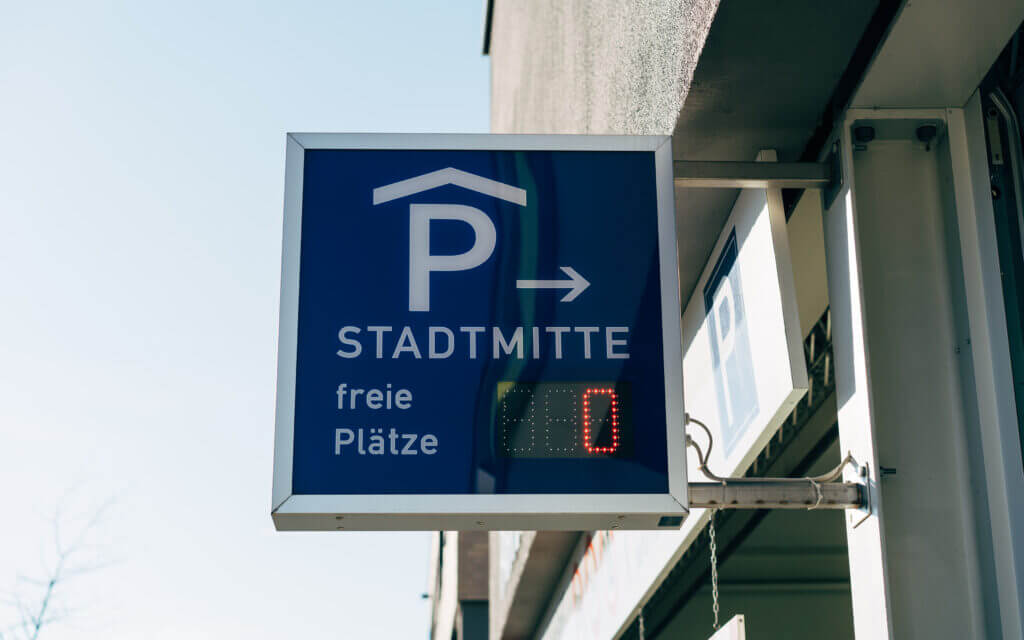
Parking guidance systems are familiar to anyone who moves through larger cities. The signage not only shows drivers the way to parking spaces and parking garages, but also provides real-time information on the current occupancy status. This allows drivers to quickly determine whether they should head for a parking space or look for an alternative.
Parking guidance systems are also helpful within the parking area
The larger the parking space on offer, the more important the associated organization is. If drivers are only shown a very small number of free parking spaces in a parking garage, the search for them could prove to be complicated. If the parking garage has several floors, searching for a parking space without additional displays may mean driving through the floors for several minutes. Of course, this also poses a risk of accidents and unnecessarily pollutes the air with exhaust fumes.
Parking guidance systems start at the entrance ...
As soon as you enter the parking garage, a digital display board informs you which floor has free parking spaces. It can also indicate if certain parking spaces need to be kept permanently or temporarily free for certain groups (permanent tenants, women's parking spaces, delivery traffic). Drivers can navigate to the relevant floor without having to search for a long time. Each floor is also marked with the current symbol for "free" or "occupied". If the occupancy status of a floor changes, these parking guidance systems allow drivers looking for a parking space to decide spontaneously to turn off or continue up or down.
... and end at the individual parking spaces
Using green and red light signals at the individual parking spaces, entering drivers can see at a glance where they can find a free parking space. This also avoids unnecessary journeys and thus reduces stress, the risk of accidents and air pollution. The lights mounted above the parking spaces or embedded in the ground are updated in real time thanks to special cameras. When a car enters the parking space, the light signal changes color from green to red. As soon as the parking space is cleared again, the light changes back to green.
These digital parking guidance systems not only ensure a high level of convenience, but also allow statistics to be kept:
- What is the overall occupancy situation?
- Over which hours is it distributed?
- Which parking spaces are accessed first?
- And how are the drivers distributed among the available parking spaces when they are underutilized?
FAQ
What are the benefits of a modern parking guidance system?
A modern parking guidance system offers numerous benefits for drivers and operators: It reduces traffic caused by drivers searching for parking spaces through real-time navigation to available spots, thereby decreasing traffic congestion and CO2 emissions. The intelligent control system optimizes parking space utilization and increases efficiency. For drivers, this means less stress and time saved when looking for a parking spot. Operators benefit from improved monitoring via sensors and cameras, as well as comprehensive analytics to optimize their services. Additionally, modern systems enable integration into smart city concepts and offer flexible reservation options.
What types of parking guidance systems are available, and which ones are best suited for large parking lots?
Parking guidance systems can be divided into various technological categories, each of which offers specific advantages and disadvantages for large parking lots. The most important systems are:
Sensor-based systems
Magnetic-field-based systems use ground sensors to detect parking space occupancy, while ultrasonic and infrared systems detect the presence of vehicles using appropriate sensors.
Camera-based systems
These systems use video technology to identify available parking spaces and are particularly effective for large areas, as they can monitor multiple parking spaces at the same time.
Digital Systems
App-based solutions provide real-time information on parking availability and reservation options. These can be combined with GPS technology to enable precise navigation to available parking spaces.
Recommendation for large parking lots
A combination of camera systems and app-based management is particularly well-suited for large parking lots. This offers:
- Real-time monitoring of parking lot occupancy
- Advance planning and booking options
- Efficient Traffic Management
- Integration into existing barrier systems
Modern license plate recognition combined with app-based control offers the most comprehensive solution for large parking lots, as it optimizes both access control and the search for parking spaces.
How does a digital parking guidance system work, exactly?
A digital parking guidance system collects and processes parking data in real time using various sensor technologies and makes this information available to drivers. Data is collected via ground sensors, magnetic field sensors, cameras with license plate recognition, or ultrasonic sensors, which determine the occupancy status of parking spaces. This data is transmitted to a central control unit, which evaluates it and forwards it to drivers via digital display boards, smartphone apps, or navigation devices. This directs drivers directly to available parking spaces, reducing traffic caused by drivers searching for parking and optimizing parking space utilization. The software also enables digital management of parking areas with features such as cashless payment, reservations, and utilization analyses.
How does a parking guidance system improve customer satisfaction?
A parking guidance system significantly increases customer satisfaction by enabling drivers to find an available parking space quickly and stress-free. Real-time information on available parking spaces noticeably reduces wait times and traffic congestion, leading to a more relaxed parking experience. The automatic detection of available parking spaces also optimizes overall parking lot utilization and prevents frustrating drives in search of a spot. Modern systems offer additional convenience through digital payment options and protect customers from issues such as lost or damaged tickets, which has a positive impact on the overall customer experience.
How is a parking guidance system installed and put into operation?
A parking guidance system is typically installed and implemented in several steps. First, a needs analysis is conducted and the parking area is customized. The actual installation then involves setting up the necessary hardware, such as sensors (e.g., cameras, ultrasonic or magnetic field sensors), digital display panels, and a central control unit for data processing. The sensors detect the occupancy of the parking spaces and transmit this information in real time to the control unit. The processed data is then relayed to drivers via the display boards or a mobile app. Following the technical installation, system integration and connection to existing infrastructure take place. The entire installation and commissioning process can be completed within a few days. A service team is then available for ongoing support and optimization of the system.
Can a parking guidance system be integrated with existing IT and building management systems?
Modern parking guidance systems can be easily integrated into existing IT and building management systems. Through open interfaces (APIs) and standardized protocols, parking management solutions can be connected to various business applications, time-tracking tools, payroll systems, and barrier systems. Integration is typically software-based and requires no costly hardware investments. Parking data from various sources—such as sensors, barriers, and parking meters—can be consolidated into a central platform and shared. Cloud-based systems also enable rapid implementation without major structural changes. This networking creates valuable synergies between different systems, benefiting both operators and users.
How secure and GDPR-compliant are modern parking guidance systems?
Modern parking guidance systems are designed in compliance with strict data protection guidelines and are GDPR-compliant. License plate recognition is based on the parking operator’s legitimate interest (Art. 6(1)(f) GDPR) and is subject to clear rules: The captured license plates are automatically deleted upon completion of the parking process, provided there is no parking violation. Only the data necessary for the parking process is collected, and no images of individuals are stored. Data processing is limited to the license plate and entry and exit times, while the data is stored in Germany. In addition, parking lot operators must indicate the license plate capture via appropriate signage before the entrance and allow a grace period during which the parking space can be vacated without an obligation to pay. All processing is encrypted and carried out in accordance with technical and organizational measures to protect the data.