AI-Powered Parking Management 2.0: Smart Technologies for Stress-Free Parking

Anyone who has ever struggled through congested city streets knows the problem: the never-ending search for an open parking spot. Parking Management 2.0 promises a stress-free solution to this everyday urban struggle through the use of smart technologies. In this article, we’ll explore why smart parking is important, which smart technologies are improving parking systems, and how the integration of artificial intelligence is revolutionizing road traffic.
What is smart parking, and why is it important?
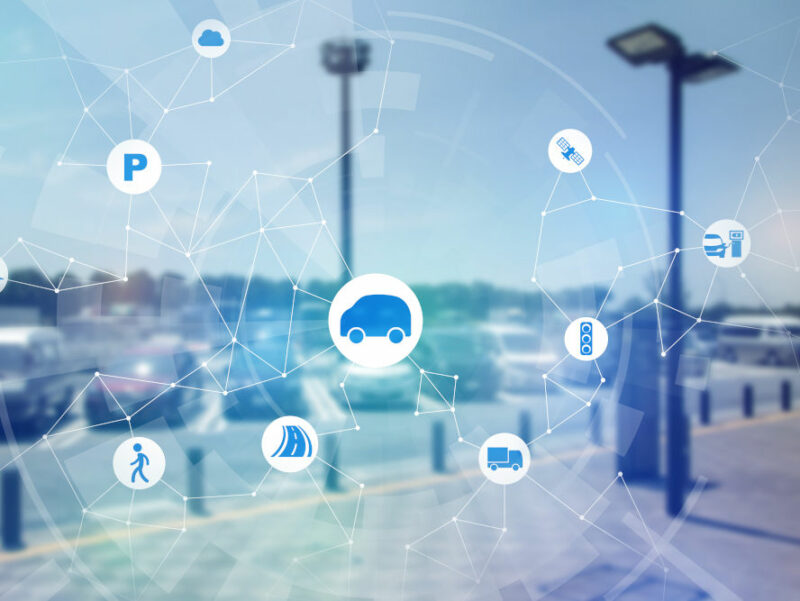
Smart parking is a system that uses modern, digital technologies to optimize vehicle parking. It relies on sensors, cameras, and IoT devices that collect real-time information about available and occupied parking spaces. Thanks to this technology, drivers no longer have to search for an available spot, which improves traffic flow in cities and makes finding a parking spot easier.
LoRa-based solutions are a commonly used technology in smart parking management. Their main advantages are energy efficiency and robustness. They can also be easily scaled and enable real-time monitoring of parking space availability using ultrasonic sensors.
The use of smart parking systems not only makes finding a parking space less time-consuming, but also alleviates urban traffic problems, as fewer cars are on the road searching for parking. These improvements are urgently needed to ease congestion in urban areas, improve traffic flow, and achieve sustainable urban mobility. Thus, smart parking systems play a crucial role in the development of “smart cities” and in the creation of an efficient public space.
How can smart technologies improve parking?
Modern, innovative technologies are revolutionizing the way cities manage parking. Through the use of artificial intelligence (AI) and various types of sensors, drivers receive precise information about available parking spaces. Smart parking systems use cameras and AI to provide a digital solution for parking management and planning. Live data guides users directly to available parking spaces, significantly reducing search time and thereby decreasing inner-city traffic. By seamlessly integrating IoT devices and AI into parking guidance systems, operators enable optimized use of limited parking space, offering a reliable solution to urban mobility challenges.
LoRa and camera-based solutions
LoRa technology has established itself as an integral part of smart parking solutions, which are of great importance for urban mobility. Thanks to its long range and low power consumption, it plays a crucial role in IoT-driven parking systems. LoRa provides a reliable solution for parking management, enhanced by seamless integration with artificial intelligence-based systems.
LoRa technology plays a key role in modern urban development. It forms the foundation for innovative technologies that not only display real-time parking availability but also, when combined with camera-based solutions, revolutionize the monitoring and analysis of parking areas. Smart parking systems can thus support urban mobility and ensure a smooth flow of traffic.
The advantages of LoRa technology for smart parking solutions can be summarized as follows:
- Increased Availability of Parking Data
- Accurate information about available parking spaces
- Seamless integration into existing urban mobility systems
- Supporting Sustainable Urban Development Through Efficient Parking Management
This cutting-edge combination of LoRa technology and neural networks thus opens up new possibilities for future-oriented and intelligent parking management.
Optimizing Parking Systems with Smart Software and AI
Thanks to advanced technologies such as artificial intelligence (AI) and computer vision, managing parking spaces in urban areas presents an innovative challenge today. Smart software and AI play a crucial role in preventing parking abuse and ensuring efficient parking management.
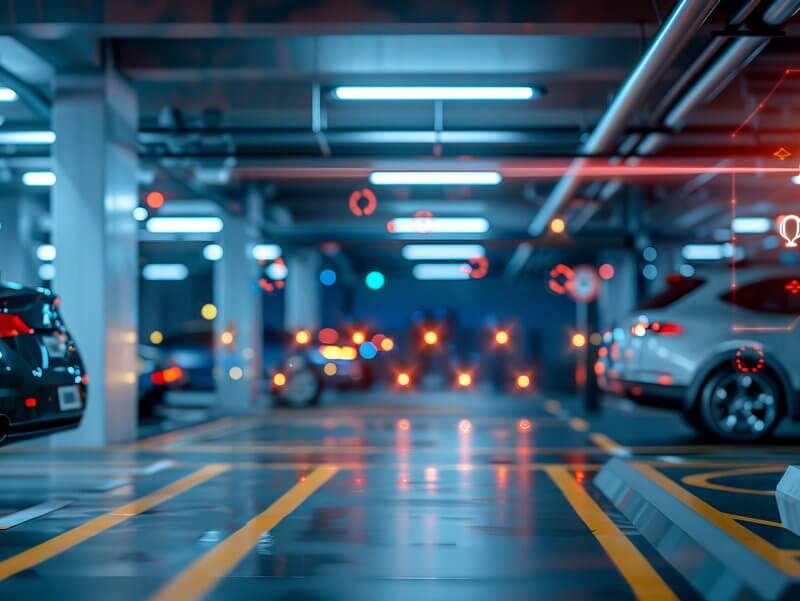
Modern systems monitor parking areas using camera-based solutions that ensure continuous and comprehensive real-time monitoring. These artificial intelligence systems can detect available parking spaces and display them to drivers in real time. This not only significantly reduces the time spent searching for a parking spot but also helps reduce traffic congestion.
Furthermore, the use of smart parking systems allows for seamless integration into the concept of urban mobility. Applications based on machine learning and neural networks provide drivers with real-time information on parking availability and guide them directly to available parking spaces. In addition, smart parking systems and IoT-based technologies enable features such as the automatic adjustment of parking barriers, which in turn improves safety and the customer experience in parking garages.
Overall, digital solutions—supported by modern AI technologies—offer a reliable, efficient, and user-friendly way to successfully address the challenges of today’s parking management in urban centers. They thus play a vital role in the future of urban mobility and smart cities.
Real-time data from sensors and gateways
The introduction of innovative technologies such as sensors based on the LoRaWAN protocol has significantly improved parking management in urban areas. These sensors are capable of detecting the presence of vehicles and transmitting detailed data to gateways in real time. A notable example is SenseCAP from Seeed Studio, which enables the collection of environmental data in smart cities and in agriculture. The benefits of this technology are manifold:
- No external wiring is required.
- Seamless integration into existing systems.
- Precise, real-time monitoring of parking spaces.
This advanced technology not only provides a reliable solution for ensuring the availability of parking spaces, but also helps optimize urban mobility. Companies such as Bosch have used LoRaWAN for smart parking solutions to take a decisive step toward more efficient urban mobility.
With the help of LoRa-enabled sensors and gateways, parking management in high-traffic urban areas is being revolutionized in a sustainable way by providing precise information on the availability of open parking spaces, thereby making a significant contribution to smarter parking management and urban mobility.
Camera-based technologies and license plate recognition
Camera-based technologies and automatic license plate recognition (ANPR) are playing a revolutionary role in modern parking lot management.
Camera-based surveillance technology:
- Use of Fixed Cameras for Real-Time Monitoring
- Identifying Cars and Measuring Parking Lot Occupancy
- Preventing Parking Abuse by Detecting Unauthorized Parking
Automatic License Plate Recognition (ANPR):
- Provides a reliable solution for vehicle identification
- Support function for enforcing parking regulations
- Data Foundation for Smart Parking Management
By combining these technologies, parking lot operators can obtain relevant data on the availability of open parking spaces in real time and share this information with drivers. Ground-level and overhead sensors also provide data that is analyzed using artificial intelligence and machine learning to optimize the use of public space and contribute to improving urban mobility.
In summary, camera-based solutions and ANPR are key technologies for the development of advanced and intelligent parking systems in urban areas, enabling seamless integration into the smart cities concept. They help enhance urban mobility and make stays in urban areas more pleasant.
The Use of AI in Traffic Management
The integration of artificial intelligence (AI) into traffic management is fundamentally transforming urban transportation systems. Intelligent traffic management systems equipped with AI are capable of analyzing sensor and camera data in real time and then proactively adjusting traffic flow to reduce congestion. Artificial intelligence enables dynamic traffic control that rapidly leverages the rapid interpretation of large amounts of data. This adaptability results in an optimized transportation infrastructure that not only facilitates traffic flow but can also respond to the needs of a growing urban population.
Efficient Traffic Coordination
Effective traffic management can be significantly improved through the use of smart parking systems and the integration of artificial intelligence (AI). Sensors, cameras, and IoT devices monitor parking space occupancy in real time and provide dynamic navigation guidance to available parking spaces. This reduces the time drivers spend looking for parking and contributes to a smoother flow of traffic.
In addition, digital solutions—such as parking management software and apps for collecting parking fees—help further optimize parking and urban mobility. They contribute to creating a more sustainable environment and reducing unnecessary emissions.
The use of computer vision and advanced machine learning models to detect available parking spaces fits seamlessly into this technological integration and promotes optimized use of public space.
These machine learning methods and the camera-based solution help curb parking abuse and maximize the availability of parking spaces. Smart parking systems thus offer a reliable solution to the challenges of parking management in urban areas and play a crucial role in the development of future-oriented, smart cities.
Automation of Toll Collection and Enforcement
The automation of toll collection and enforcement plays a crucial role in the efficiency and sustainability of urban mobility. Thanks to advanced technologies such as automatic license plate recognition, entry and exit times are significantly reduced because manual checks can be eliminated.
Modern automated parking systems use edge computing, machine learning, and the Internet of Things (IoT) to provide optimized parking management in public spaces. These smart parking solutions not only offer enhanced security but also promote sustainability by, for example, reducing the time spent searching for parking spaces through the use of IoT-based systems with ground sensors. Consequently, this leads to a reduction in unnecessary emissions and optimizes traffic flow in urban areas.
By utilizing automation, parking systems can increase the number of vehicles that can park in the same space—in some cases, up to four times as many. This provides a reliable solution for both ensuring the availability of parking spaces and efficiently managing parking areas in modern, smart cities.
Digital Tools for Parking Management
Managing parking spaces in urban areas requires a high degree of attention and adaptability. Smart parking systems that use sensors, cameras, and IoT devices for real-time occupancy monitoring represent a groundbreaking innovation. The key lies in the integration of artificial intelligence (AI), which, together with data from sensors and cameras, optimizes parking management. Digital solutions such as parking payment apps not only regulate fee collection but also improve traffic flow.
Parking sensors play a key role in this regard: They provide precise, real-time parking data, which substantially reduces the time spent searching for available parking spaces and, as a result, lowers emissions. Furthermore, camera-based monitoring technology, supported by AI, effectively reduces parking abuse and plays a crucial role in ensuring compliance with parking regulations.
Real-Time Data and Parking Monitoring
Parking management in urban areas faces familiar challenges: Traffic generated by drivers searching for parking not only causes traffic jams but also contributes to pollution, and the unauthorized use of parking spaces leads to traffic violations. However, artificial intelligence (AI) offers advanced technologies that provide a reliable solution to these problems.
With sensor-based real-time occupancy data, enforcement agencies can detect and address parking violations in real time. This leads to a significant reduction in the number of vehicles searching for available parking spaces and helps reduce parking in no-parking zones or the blocking of traffic lanes.
Innovative mobile parking guidance systems (PGS), which have been available on smartphones since December 2023, guide drivers to the nearest available parking space and thus support digital parking management.
In addition, smart parking solutions—such as the camera-based, AI-powered system implemented in Frauenfeld—enable reliable monitoring of public spaces. Drivers are notified of available parking spaces, while license plates are recognized and vehicle entries and exits are recorded. This allows for a detailed analysis of parking space usage and the seamless integration of digital solutions into urban mobility.
Efficient Workflows and Better Decision-Making
Efficient traffic and parking management plays a crucial role in urban mobility and quality of life in urban areas. The use of AI-powered sensor technology enables the precise collection of data on parking behavior and traffic flow, which contributes to more informed decision-making.
This technology not only makes it possible to generate detailed reports on parking space usage, but also to conduct trend analyses and make forecasts. These forecasts are based on the analysis of current and historical traffic data and thus support the dynamic allocation of parking resources.
Advanced technologies such as machine learning and neural networks improve traffic flow and reduce traffic congestion through adaptive traffic control and intelligent navigation systems. This results in less environmental impact and a higher quality of life for citizens.
In short, by utilizing state-of-the-art technologies, key aspects of urban infrastructure can be optimized, thereby improving the availability of parking spaces, making parking lot monitoring more efficient, and making the overall management of parking areas more adaptive.
Benefits of Integrating AI and Smart Technologies into Parking Management
The introduction of AI-powered parking systems, which rely on camera-based solutions and other sensor technologies, offers a wide range of benefits. These systems can inform drivers in real time about available parking spaces, leading to a sensible and efficient use of limited public space. Through the use of computer vision and the Internet of Things (IoT), the accurate detection of empty parking spaces can be ensured and utilization optimized. Seamless IoT integration requires ground-level sensors to reduce search times and lower emissions, resulting in more sustainable urban mobility. Overall, such innovative technologies help improve traffic flow and truly make smart cities more livable.
Less stress and frustration for drivers
Parking management is an essential part of city life in densely populated urban areas. The use of AI-powered parking guidance systems can significantly reduce the stress and frustration associated with finding a parking spot. Smart parking solutions provide real-time information on the availability of open parking spaces, eliminating the need to drive around aimlessly in search of a spot.
The seamless integration of such systems into digital platforms such as Open Government Data also offers added value not only for drivers but also for urban planning. Through the continuous analysis and use of rich datasets, traffic flows and available space can be better understood and optimized.
An effective parking control system also helps minimize unauthorized parking and ensures high utilization of available parking spaces. Modern technology, with its sensor-based stations, can monitor up to 50 parking spaces simultaneously, leading to reliable and efficient management of public space. Thus, artificial intelligence and advanced technologies play a crucial role in improving the urban mobility experience and contributing to the well-being of city residents.
More Efficient and Optimized Parking Experiences
AI-powered parking management plays a crucial role in creating more efficient and optimized parking spaces, which is a key aspect of urban mobility. This is made possible by advanced technologies such as the integration of sensors, cameras, artificial intelligence (AI), and the Internet of Things (IoT), which work together to improve traffic flow and thereby create a more sustainable urban environment.
Smart parking systems based on technologies such as ultrasonic sensors and LoRa (Long Range) offer a reliable solution for monitoring available parking spaces in real time and sending this information directly to vehicles or apps. Camera-based solutions not only improve the efficiency of parking management but also help address the problem of illegal parking.
The seamless integration of AI and IoT into parking garages not only improves existing parking guidance systems; it also automates parking garage management and enhances security, which significantly increases user satisfaction. In addition, mobile parking guidance systems accessible via smartphones offer rapid implementation, substantial cost savings, and effective digital parking management through the use of cameras, artificial intelligence, and specialized apps.
Improved Enforcement of Parking Regulations and Safety
Modern technologies play a crucial role in enhancing safety in public spaces, particularly when it comes to managing parking spaces in urban mobility systems. Smart parking systems, equipped with advanced camera technology and supported by artificial intelligence (AI), offer enhanced monitoring capabilities. These systems are capable of providing real-time updates on parking status and recognizing license plates. This not only promotes safety in parking lots but also acts as a deterrent against criminal activity.
Innovative solutions such as IoT-enabled cameras can use machine learning and neural networks to identify suspicious behavior and issue corresponding alerts. This plays a key role in maximizing security in parking lots. Furthermore, the seamless integration of AI and IoT in parking garages enables the provision of personalized services, such as reserving available parking spaces, which ultimately enhances the customer experience.
In summary, the combination of artificial intelligence and advanced surveillance technologies creates a reliable system for maintaining parking order and preventing parking violations.