Parking Tickets: What Is Actually Permitted by Law?
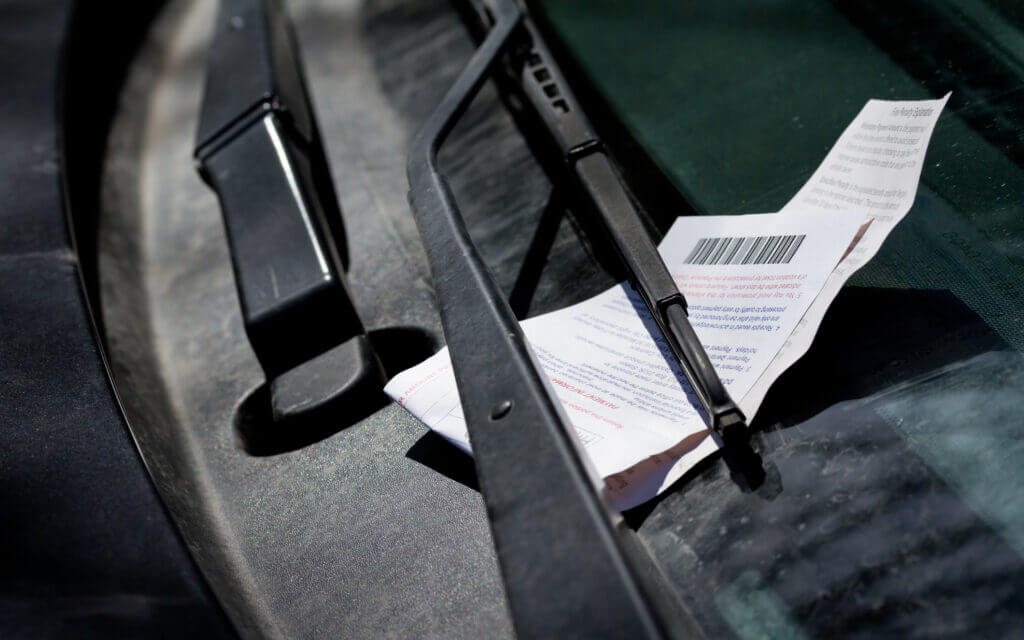
There’s no question about it: parking tickets are a nuisance. And surely there isn’t a single driver who hasn’t found a ticket or two tucked behind their windshield wiper at some point. Just a quick stop at the bakery—and skipping the parking meter beforehand—can sometimes lead to the annoyance of unplanned extra costs. But the ticket doesn’t always come from the city’s public order office: On private parking lots, the respective owners have the right to enforce their property rules. This officially includes the authority to issue private parking tickets—at least when certain conditions are met.
A parking ticket in a free parking lot: What's that all about?
Customers are usually allowed to park for free in the parking lots of supermarkets and other retailers. However, managing the parking lot incurs ongoing costs, such as for maintenance, lighting, cleaning, and winter maintenance. Retailers are happy to cover these costs for their own customers, but not for unauthorized third parties or long-term parkers. For this reason, most of these parking lot operators have opted for a solution that works well for everyone involved: The parking lot is available free of charge, but only for a maximum parking duration. This duration must be clearly indicated on signs and set at a length that allows customers to comfortably complete a large shopping trip. Anyone who forgets their parking disc or treats the space as a long-term parking spot must pay a fee for their parking violation. The underlying parking conditions must be clearly visible to parking lot users.
When can a private traffic ticket be issued?
Even though signs in parking lots repeatedly remind drivers of the rules of the StVO that must be followed, these signs are not the basis for penalizing parking violations. Rather, it is a kind of contractual penalty: The retailer or parking lot operator provides parking spaces. Anyone who uses such a parking space thereby agrees to the underlying terms and conditions of use. Sufficiently large, clearly legible signage is essential for this.
Drivers who find a parking ticket on their car after using a parking lot or receive a letter demanding payment and believe it to be unjustified can contact the parking company’s customer service. One way to recognize reputable parking lot operators is that they are easily reachable through various channels, such as by phone and email.
Do parking lot operators have free rein when it comes to parking conditions?
Parking lot operators have broad authority regarding parking conditions. However, first, these conditions must be clearly posted. Second, they must not violate applicable laws and regulations and must be reasonable. Since the latter condition, in particular, is open to different interpretations, there is extensive case law on this matter, which serves as a basis for determining the contractual penalties to be paid. Private parking lot operators are free to decide on these matters, but the exact amount of the contractual penalty to be paid in the event of a violation must be specified in the parking conditions.
Is it permissible to tow cars from supermarket parking lots?
Provided that this is clearly indicated by signs, it is indeed permissible for cars to be towed or have a wheel clamp attached. However, for most parking lot operators, this is considered a last resort: Retailers are keen to maintain their good reputation and, in practice, tend to be accommodating at first. This is not, however, a free pass—there are limits to this leniency. And it’s not just a matter of having your car towed; the person responsible must also cover the associated costs. Admittedly, a 2014 ruling by the Federal Court of Justice (BGH) caps these costs at 175 euros. Furthermore, the ruling stipulates that if there are sufficient available parking spaces, illegally parked vehicles may not be towed. In such cases, however, parking violations do not have to be tolerated, and parking enforcement measures—such as wheel clamps or similar devices—may be used.
Who is liable for the parking violation—the driver or the vehicle owner?
By using the parking space, the driver of the vehicle enters into a legally binding contract with the parking lot operator—regardless of who owns the car. If the driver and the vehicle owner are not the same person, the vehicle owner is not required to pay the contractual penalty or any resulting legal costs. However, this is contingent upon the owner identifying who may have parked the vehicle in the parking lot at the time in question. If the owner is unwilling or unable to provide this information, the vehicle owner will be held liable.
Fair parking is better!
Supermarket operators and other retailers want satisfied customers. These businesses aim to make money by selling goods or services that have nothing to do with the parking lot. That’s why it’s obvious that everyone must follow the rules. The parking disc is a classic way to limit the maximum parking duration. A better and more modern option is available in parking lots with license plate scanning. Here, the exact parking time is determined, and only those who have actually parked illegally are asked to pay. This means, for example, that forgetting to set the parking disc can no longer happen. If a shopping trip happens to take longer than expected, accommodating parking lot operators will turn a blind eye on such occasions.