Parking management for commercial parking lots: What technologies are used?
Parking management is an essential component of the transportation strategy in urban development plans, which regulates the structure, spatial distribution, extent, and use of parking areas. It encompasses the provision of parking spaces, time restrictions, parking fees, and park-and-ride systems to manage demand for parking, which can be influenced by availability, parking fees, and proximity to alternative modes of transportation.
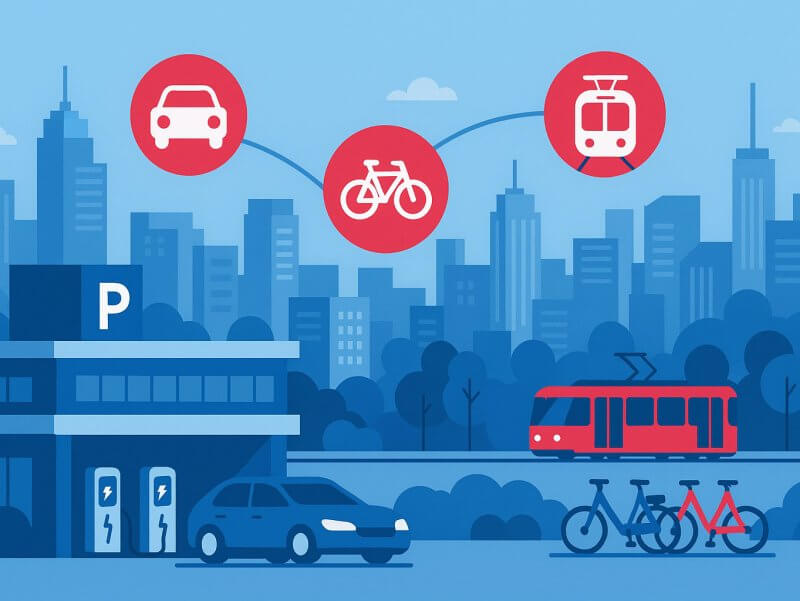
These management strategies help reduce traffic congestion, improve air quality, and promote the use of public transportation, bicycles, and walking. Given the rapid changes in the parking industry driven by new technologies and evolving regulations, this article explores how commercial parking facilities are leveraging modern technologies for efficient parking management.
The Benefits of Parking Management for Businesses
Parking management offers significant benefits to businesses by improving the availability of parking spaces and reducing traffic congestion, which leads to more efficient transportation systems. Optimizing parking space allocation through automation not only makes resource utilization more efficient but also creates a better-organized and more productive work environment.
Furthermore, parking management supports local businesses and retailers by increasing the turnover rate of parking spaces, which can lead to an increase in customer traffic. This is particularly beneficial in urban areas, where parking space is often scarce. The improved visibility at intersections and thoroughfares also significantly enhances road safety.
In addition, parking management through proptech solutions enables companies to better understand their parking usage through detailed analyses and to make data-driven decisions based on that information. This not only leads to a more efficient use of existing parking spaces but also opens up new revenue opportunities through the diversification and expansion of parking services.
Technologies and Systems for Modern Parking Management
Modern parking management systems use advanced technologies to increase efficiency and user-friendliness. One of the key elements is Automatic Number Plate Recognition (ANPR), which is offered by Autopay. This technology enables seamless entry and exit without physical barriers, reduces the need for on-site staff, and minimizes maintenance requirements. In addition, ANPR supports the integration of EV charging stations and sustainable parking lot design, which is particularly important for meeting the growing demand for electric vehicle infrastructure.
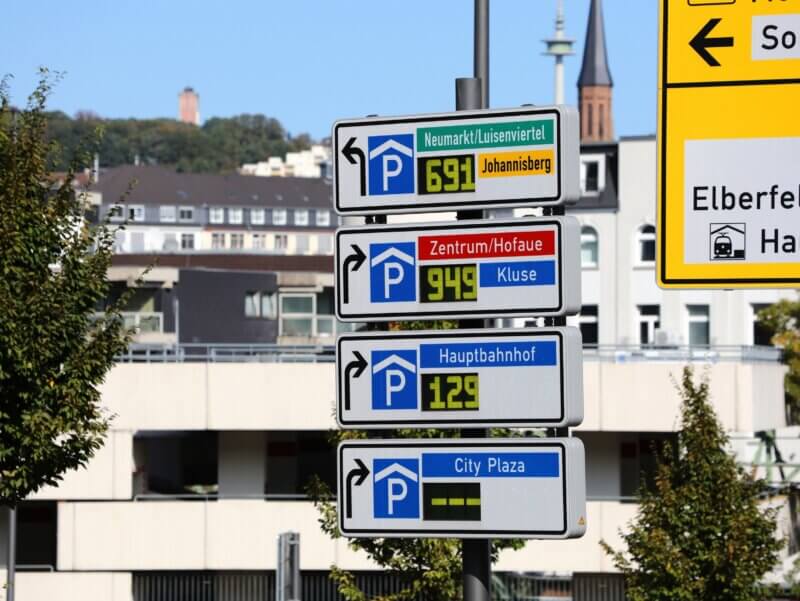
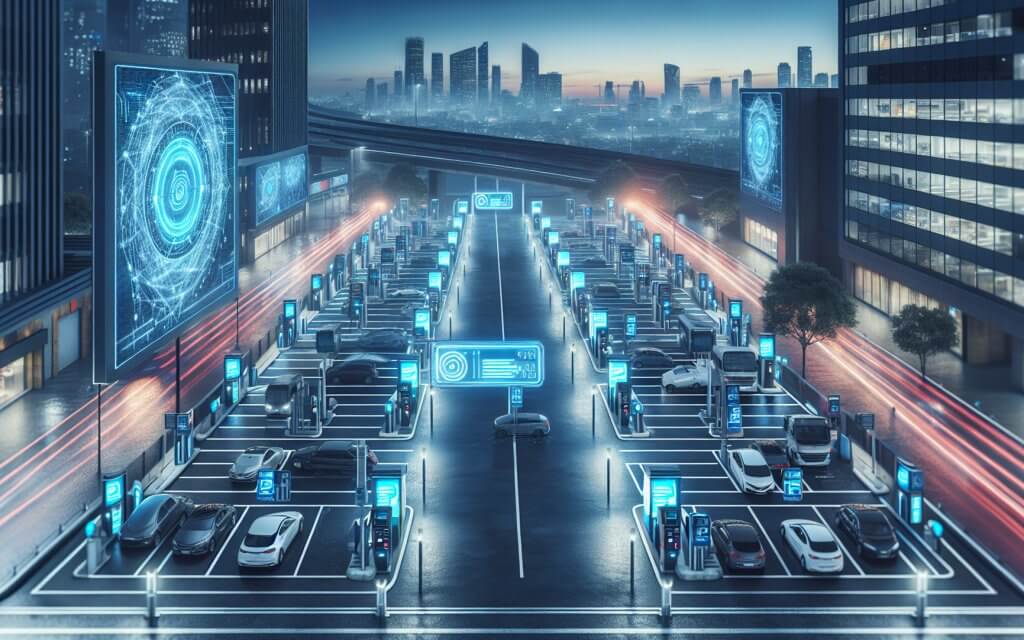
Another innovative system uses sensors that detect occupied and vacant parking spaces and guide visitors to available spaces via strategically placed screens. In addition, the entrance and exit gates are equipped with LED lighting for better visibility and safety, supplemented by an intercom system for customer support.
Challenges, Criticisms, and Fair Treatment of Parkers
The challenges of parking management include ensuring data protection and compliance with the GDPR, which are addressed by systems such as PRM that ensure high data protection standards. In addition, enforcing parking fees requires efficient handling of non-paying parkers, which is facilitated by digital monitoring systems that enableboth flexible pricing and higher revenue. These systems reduce the need for manual intervention and thus lower operating costs.
Municipal authorities face the challenge of effectively managing parking resources and allocating parking spaces based on real-time data, a process supported by smart parking solutions. Revenue from parking fees contributes to the maintenance and improvement of urban transportation infrastructure, although fees and time limits may vary by zone. The economic viability of parking systems depends on various factors, including enforcement costs and the overall efficiency of the system.
The implementation and maintenance of parking management systems incur significant costs for local governments, which must be weighed against the potential revenue from parking fees. These costs are largely determined by the number of staff required for monitoring and administration. The overall efficiency of a parking management system can be influenced by factors such as the availability and accessibility of parking spaces, the ease of payment, and the effectiveness of enforcement.
Future Prospects for Parking Management
In Vienna, parking management has proven successful by reducing traffic caused by drivers searching for parking spaces and shortening the average parking duration. This contributes to the “polluter pays” principle in transportation by requiring users to pay based on their environmental impact. In Berlin, parking management aims to regulate the balance between supply and demand, reduce traffic congestion, and promote sustainable modes of transportation.
Future parking lot designs could be made more environmentally friendly by incorporating more greenery, stormwater infiltration features, and lighter-colored surfaces. In addition, parking lots could be covered with solar panels to generate electricity, which would contribute to energy efficiency. Parking garages could be opened up to delivery vehicles so that packages can be loaded onto bicycles or into parked cars.
One innovative development is autonomous parking, in which drivers drop off their vehicles at the entrance to the parking garage and the vehicle finds a parking space on its own. The vehicle can be summoned to the exit of the parking garage via an app without the driver having to get out of the car while in the parking area. These technologies could revolutionize the use of parking spaces and significantly improve efficiency and the user experience.
FAQs
- How does a dynamic parking guidance system work?
A dynamic parking guidance system periodically collects data on the number of available parking spaces and the number of vehicles entering and exiting connected parking garages. This information helps to efficiently manage parking space utilization. - What does "parking space management" mean?
Parking space management refers to the targeted organization and control of the supply and demand for parking spaces on public streets. It is an essential component of parking management and primarily involves paid parking in public spaces. - What is the main purpose of parking lot monitoring at companies?
The main purpose ofparking lot monitoring at companies is to protect parking spaces for customers and employees from unauthorized parking. This helps ensure the effective use of parking spaces and prevents potential revenue losses. - What is parking management?
Parking management aims to make optimal use of available parking spaces while prioritizing the needs of residents. It helps regulate competition for parking spaces among residents, visitors, employees, customers, service providers, and suppliers.